Extensions & Alterations to Existing Dwellings: A Practical Guide to Building Control in Ireland
Working with existing buildings offers huge potential, whether revitalising vacant homes, extending family dwellings, or adapting older structures for modern use. In this blog we will provide a clear overview of how building control legislation applies to extensions and alterations. Below, we break down the key points for clients navigating this process.
1. Understanding the Value of Existing Buildings in Ireland
- Many existing buildings are underused but ripe for restoration and reoccupation.
- The Bringing Back Homes guidance (2018, updated 2024) remains an essential resource for navigating regulatory requirements for older buildings.
2. Building Regulations: How They Apply to Existing Homes Ireland
- Regulations are straightforward for new builds but applying them to older structures requires careful interpretation.
- Clients must understand functional requirements, particularly differences between material alterations and changes of use.
- The regulatory framework stems from the Building Control Acts, aimed at ensuring health, safety, and efficient building performance.
3. When Regulations Apply: Extensions, Alterations & Change of Use
- Key “articles of application” determine when specific parts of the building regulations must be met.
- Extensions, alterations, and changes of use all trigger regulatory obligations.
- Certain small works may be exempt, but exemptions are narrow and clearly defined.
- Importantly, works must not worsen any existing non-compliance.
4. What Counts as a Material Alteration?
Material alterations are works that could affect structural stability, fire safety, or other critical compliance matters. Requirements include:
- Meeting structural and fire safety standards.
- Ensuring energy-efficiency upgrades where more than 25% of the external envelope is renovated.
- Complying with Part D—proper materials and workmanlike construction.
5. Extensions: What You Need to Know
- All extensions must comply with the relevant parts of the building regulations.
- Article 11 applies to extension works, ensuring structural safety and integration with the existing building.
- Some requirements, such as access provisions, may not apply if the extension does not create a new dwelling.
- Knowing the distinction between a material alteration and an extension is essential for accurate compliance.
6. Change of Use: Conversions Trigger Their Own Rules
- Converting a non-dwelling into a dwelling is a defined change of use.
- Article 13 outlines the required standards, covering fire safety, ventilation, and energy efficiency.
- These requirements are not as extensive as those for new builds but still demand careful assessment and design.
7. Building Control Management System (BCMS) Requirements
- Certain works, especially conversions, must be notified to the local authority before starting.
- BCMS notification facilitates proper assessment, documentation, and inspection.
- Regardless of whether notification is required, building regulations always apply.

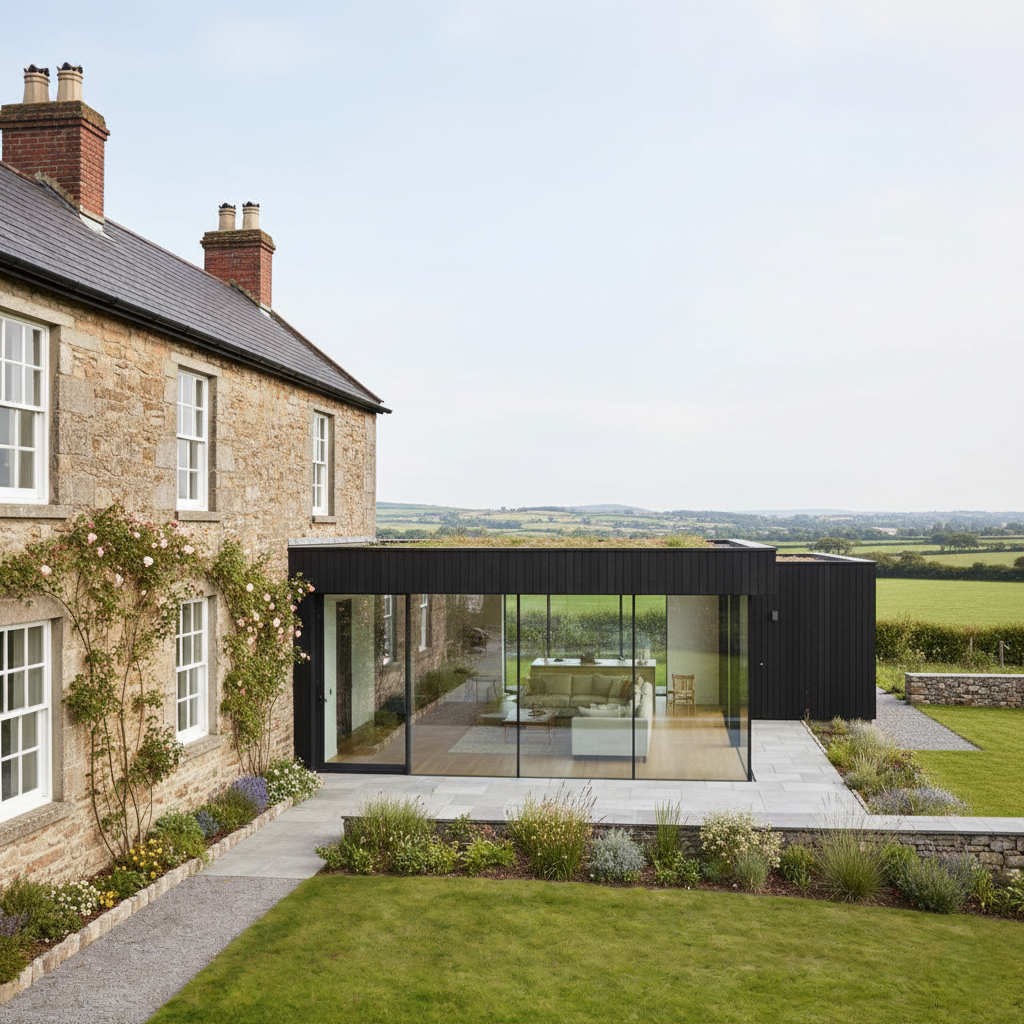
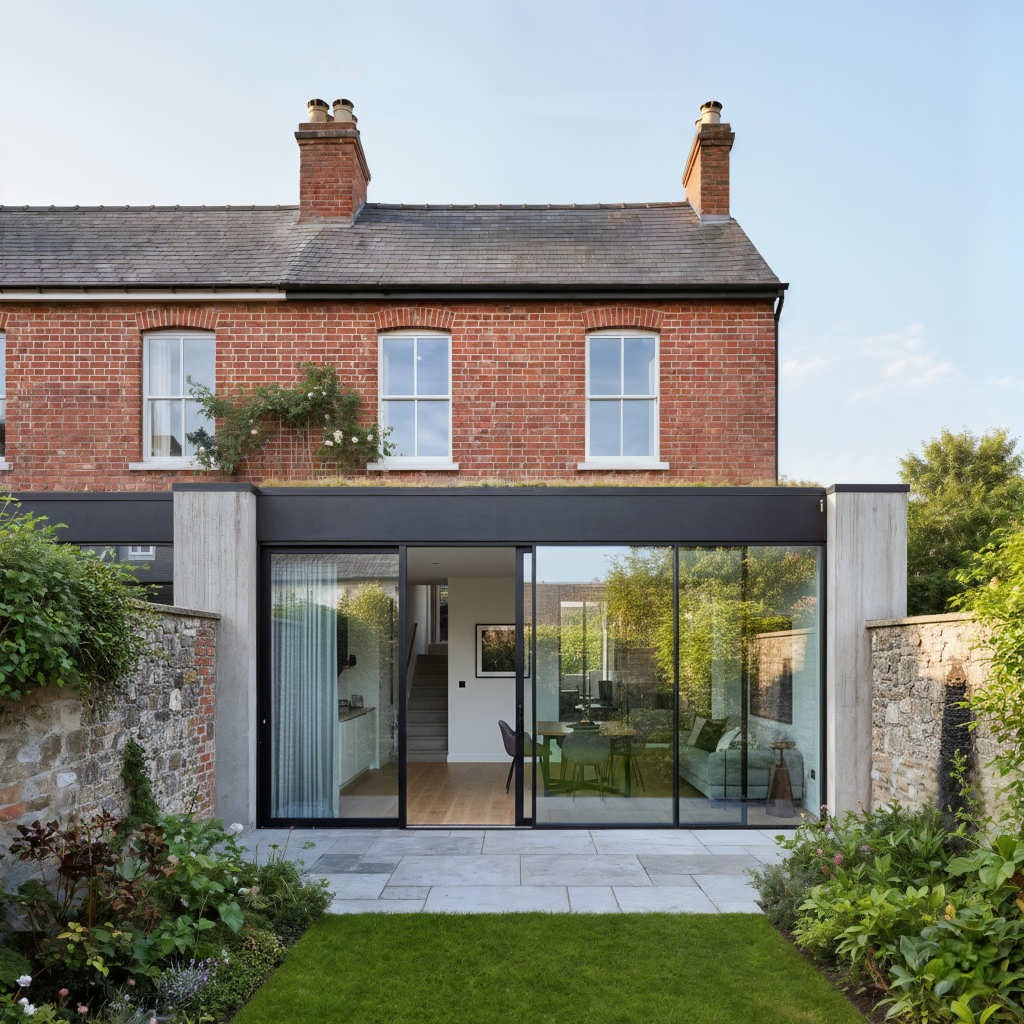
Rear view of a house with a contemporary black timber-clad gable extension
A contemporary rear extension featuring black vertical timber cladding and a dramatic gabled form. Full-height glazing and wide sliding doors create a seamless indoor–outdoor connection to the landscaped garden, filling the interior with natural light. The design contrasts elegantly with the existing red-brick terrace while maintaining its scale and character. This modern extension enhances energy performance, improves family living space, and delivers a bold architectural statement with clean lines and high-quality materials.
8. Guidance & Next Steps
- Successful projects start with a clear understanding of the regulations that apply.
- The Bringing Back Homes publication and other BCMS resources provide valuable practical guidance.
- The overarching message: building regulations are not a barrier—they are a framework enabling safe, high-quality reuse of existing buildings.
If you’d like help navigating extensions, alterations, or compliance for an existing building, Usonia Architects can guide you through the process from concept to completion.